HVAC Follow-Up Systems That Turn More Leads into Booked Jobs
Most HVAC owners assume a lost job happens on the first call.
It doesn’t.
It happens after.
What’s really happening
A lead comes in.
Maybe you answer. Maybe you don’t.
Maybe they book. Maybe they say, “I’ll think about it.”
And then…
Nothing.
No follow-up.
No second touch.
No structured next step.
That opportunity doesn’t disappear immediately.
It fades.
Why it gets worse as you grow
At low volume, you can recover things manually.
Call them back later.
Check in when you remember.
But as volume increases:
More leads come in
More estimates go out
More “not right now” responses happen
And without a system:
Follow-up gets delayed
Some leads never get touched again
Office staff prioritizes what’s urgent
Everything else gets pushed aside
No one is ignoring leads on purpose.
There’s just no structure to handle them.
What it actually costs
This is where revenue quietly disappears.
Not from bad marketing.
From incomplete follow-up.
Estimates that never get revisited
Calls that never get returned
“Thinking about it” leads that go cold
Jobs that go to the company that follows up first
This is also why retention becomes inconsistent—because most businesses don’t have a structured way to stay connected after the first interaction.
Retention becomes inconsistent.
Signs it’s happening
You’ll usually see it here:
No clear process after a call doesn’t book
Follow-up depends on who’s available
No system for estimates that didn’t close
Old leads sit untouched in the CRM
You’re unsure what happened to past opportunities
At that point, the issue isn’t lead flow.
It’s lead completion.
And if you can’t clearly see who followed up, when they did, or what happened next, you’re guessing.
You're guessing
What this looks like in a real HVAC office
A homeowner calls but doesn’t book immediately
An estimate is sent and never followed up on
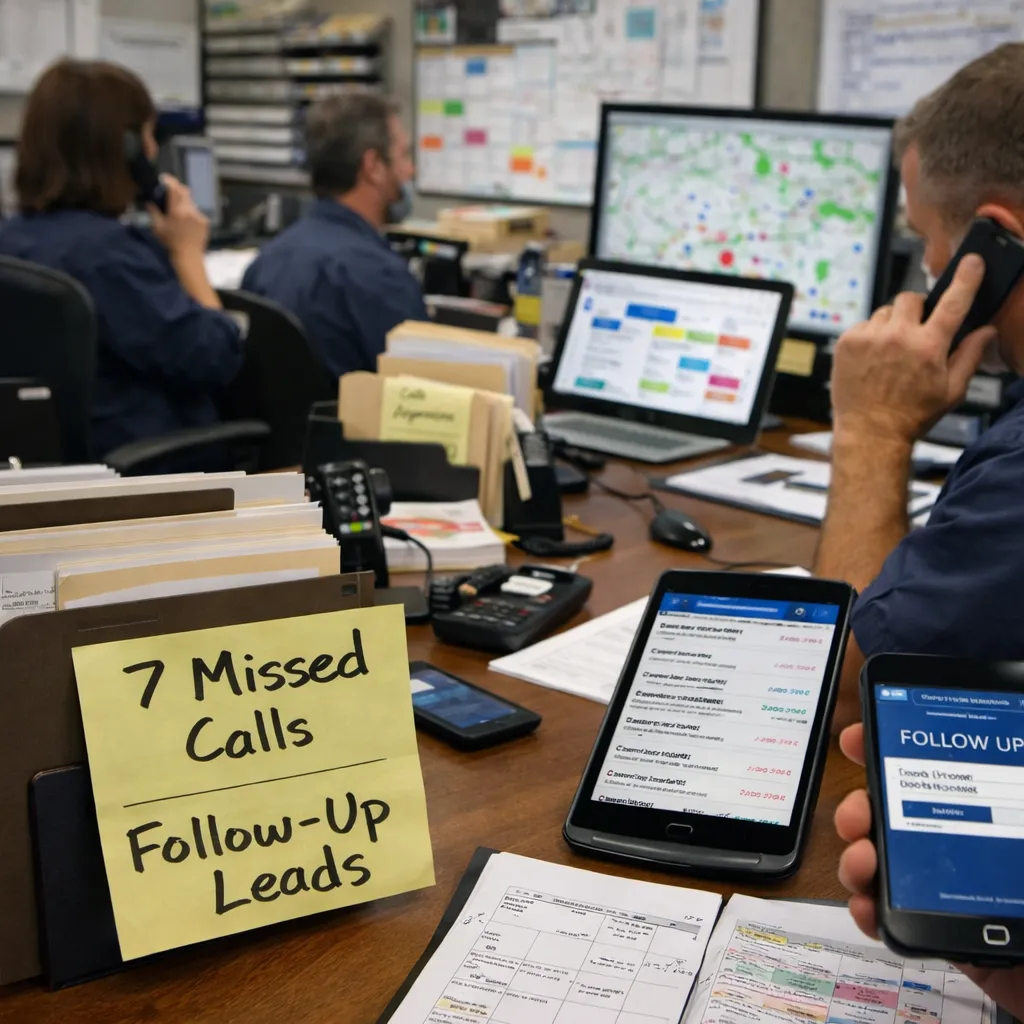
A missed call gets returned hours later (or not at all)
A lead gets one response, then nothing else
The office moves on because the day gets busy
The job wasn’t lost.
It just wasn’t worked.
What strong operators do differently
They don’t rely on memory.
They build follow-up into the system.
Immediate next-step handling
Every lead has a defined next step—even if they don’t book.
Structured follow-up sequences
Leads that don’t convert right away are automatically revisited.
Missed call recovery
Every missed call triggers a response—not a hope someone calls back.
Estimate follow-up
Quotes don’t sit. They get worked until there’s a clear outcome.
Timing that matches real behavior
Follow-up happens when the customer is still thinking—not days later.
What changes when follow-up is handled correctly
Nothing dramatic.
But everything tightens.
More leads turn into booked jobs
Fewer opportunities fall through the cracks
Revenue becomes more predictable
The office stops feeling reactive
You don’t need more leads.
You need to finish the ones you already have.
Conclusion
Most HVAC jobs aren’t lost because someone else had better marketing.
They’re lost because someone else followed up.
Follow-up isn’t extra.
It’s part of the job.
And without a system behind it, it will always be inconsistent.
CTA
If you're getting leads but bookings still feel inconsistent, the issue is usually in the follow-up.
HookWeb Design helps HVAC companies identify where opportunities are getting missed, delayed, or dropped—and what needs to be in place to handle them properly.
If you want to see where your system is breaking down, that’s exactly what the Growth Architect Audit is built for.
