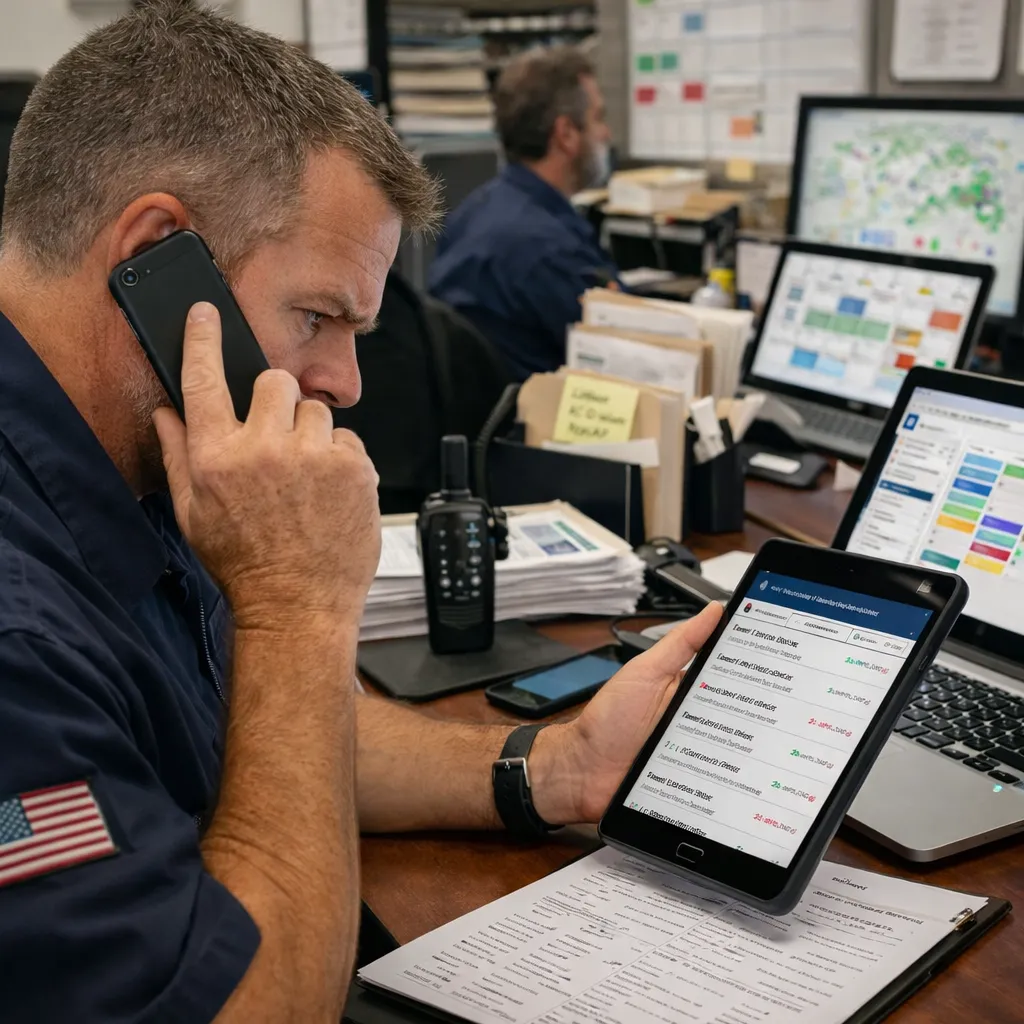
Why HVAC Funnels Don’t Create Growth (And What Actually Does)
HVAC companies are told they need better funnels.
More pages. More steps. More automation.
But that’s rarely the problem.
Because growth doesn’t break at the top.
It breaks down what happens after someone reaches out.
What’s really happening
Funnels are designed to guide someone toward a decision.
But in HVAC, decisions don’t happen on a page.
They happen in conversations.
Calls
Texts
Follow-up
Scheduling
Dispatch
That’s where jobs are won or lost.
And if those moments aren’t handled well, no funnel can fix it.
Because what actually matters is how fast someone responds once a lead comes in.
How fast someone responds.
Why this gets worse as you grow
As lead volume increases, pressure shifts to the office.
More calls. More messages. More moving parts.
Without structure, things start to slip:
Calls get missed
Responses slow down
Follow-up becomes inconsistent
Dispatch gets overloaded
The result isn’t just chaos.
It’s booked jobs that never happen.
Because the problem isn’t getting attention.
It’s handling it properly.
As volume increases, this all puts pressure on the office—and that’s where breakdowns start to show.
Pressure on the office.
Where funnels actually break
Across HVAC companies, the same issues show up:
Missed calls that never get recovered
Slow responses that kill intent
Follow-up depending on who’s available
No clear path from first contact to booked job
Funnels don’t solve these problems.
They just send more people into them.
What this looks like in a real HVAC office
A call comes in and goes to voicemail
A form gets submitted and sits too long
A lead gets a response 20–30 minutes later
Dispatch is too busy to follow up
No one circles back if the job isn’t booked
Funnels didn’t fail.
The handoff did.
What actually drives growth
Growth doesn’t come from more steps.
It comes from better handling.
Strong operators focus on what happens after the lead comes in:
How fast does someone respond?
What happens if a call is missed?
Is follow-up consistent?
Does dispatch support or slow things down?
Can you see what’s happening across the process?
That’s where growth is decided.
And what happens next—calls, texts, and follow-up—is where most revenue is won or lost.
Follow-up.
The system functions that matter
Not tactics.
Functions.
1. Immediate response
So, intent doesn’t decay.
2. Missed call recovery
So, opportunities aren’t lost.
3. Structured follow-up
So, nothing depends on memory.
4. Clear handoffs
Between marketing, office, and technicians.
5. Retention triggers
So, one job turns into repeat business.
These don’t live on a page.
They live in how your office handles demand every day.
What strong operators do differently
They stop trying to fix growth with more marketing layers.
And start fixing how the business handles demand.
They build systems that:
Catch every opportunity
Support the office under pressure
Keep response times tight
Make follow-up consistent
Create visibility across the pipeline
So, growth doesn’t feel unpredictable.
It becomes steady.
The real question
The question isn’t:
“Do you have a funnel?”
It’s:
“What happens when someone tries to do business with you?”
If the answer depends on timing, memory, or who’s available…
That’s where the breakdown is.
Conclusion
Funnels can help bring people in.
But they don’t control what happens next.
And that’s where most HVAC companies lose jobs.
Growth doesn’t come from adding more steps.
It comes from building systems that handle every opportunity properly.
CTA
If you're getting leads but bookings still feel inconsistent, the issue usually isn’t the funnel.
It’s what happens after someone reaches out.
HookWeb Design helps HVAC companies identify where leads are getting missed, delayed, or dropped—and what needs to be in place to handle them properly.
If you want to see where your system is breaking down, that’s exactly what the Growth Architect Audit is built for.
